


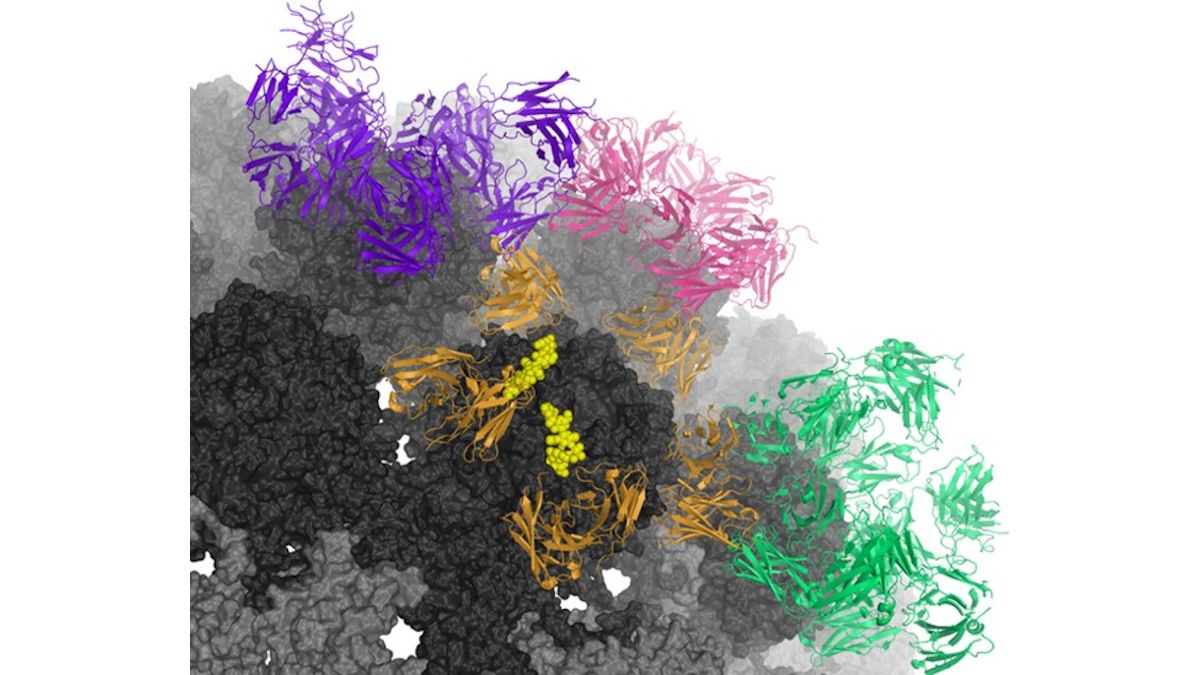
In people with severely compromised immune systems, the JC polyomavirus can trigger a currently untreatable, usually fatal brain disease.
Now, an international research team looking at the viral capsid has identified binding sites for neutralising antibodies; these sites could be used to halt infection with JC polyomaviruses. Led by Thilo Stehle of the Interfaculty Institute of Biochemistry at the University of Tübingen, the study also involved researchers from Brown University in the US and the Universitätsspital Zürich. These new insights into the interactions between JC polyomaviruses and the human immune system lay the foundation for the development of treatments and vaccines. The study was published in the journal PNAS.
The JC-polyomavirus (JCPyV) is widespread.
“It only becomes dangerous when the body’s immune system is severely weakened, for example in people with advanced HIV, patients taking strong immunosuppressants, or people who have undergone organ transplants or have certain types of cancer,” Stehle said.
In these cases, the virus can enter the central nervous system via the bloodstream and trigger a disease called progressive multifocal leukoencephalopathy (PML). This disease destroys the brain and is untreatable, and therefore usually fatal.
For the study, the research team drew on the observation that some patients do survive PML.
“Their bodies manage to neutralize the attacking JC polyomaviruses, so that they can no longer penetrate the body’s cells; the infection is stopped,” Stehle said.
The immune system achieves this neutralisation by producing precisely tailored antibodies. These antibodies attach like a lock to binding sites on the viral envelope.
“This prevents the binding site from being available to dock with another body cell.”
At the Universitätsspital Zürich, specialised antibodies against the envelope of JC polyomaviruses were isolated from PML patients and tested for their binding properties at Brown University in the US.
“We then analysed the binding mechanism of the most promising antibodies to the virus using high-resolution structural analysis with atomic precision at the University of Tübingen,” Stehle said.
However, even as the human body fights back against JC polyomaviruses, the virus develops strategies to evade the immune system.
“Genetic mutations occur at the binding sites that human antibodies use to defend themselves against the virus. This can render the antibodies ineffective; and we looked at this in detail,” said Stehle.
Insights into the structure and mechanisms of action between JC polyomaviruses and the human immune system make it possible to develop antibodies that can be used therapeutically against the infection, as well as vaccines.
“At the same time, there is potential for cross-protection against the BK polyomavirus, which is related to the JC polyomavirus and can also cause severe illness in immunocompromised individuals,” Stehle said.
“A potential vaccine could protect high-risk patients from infection with both polyomaviruses. Small molecules used therapeutically that target the antibody binding site could potentially be effective against both viruses.”