


A study by the University of Barcelona has discovered why the two main types of lung cancer — adenocarcinoma of the lung and squamous cell carcinoma — respond differently to anti-angiogenic therapy, that is, drugs that block the formation of new blood vessels that tumours need in order to grow.
The results, published in the journal Cell Death & Disease, show these differences largely depend on the environment surrounding the tumours, particularly on some very abundant benign cells called fibroblasts. This finding opens the door to the development of more personalised therapies, tailored to the specific characteristics of each tumour’s microenvironment.
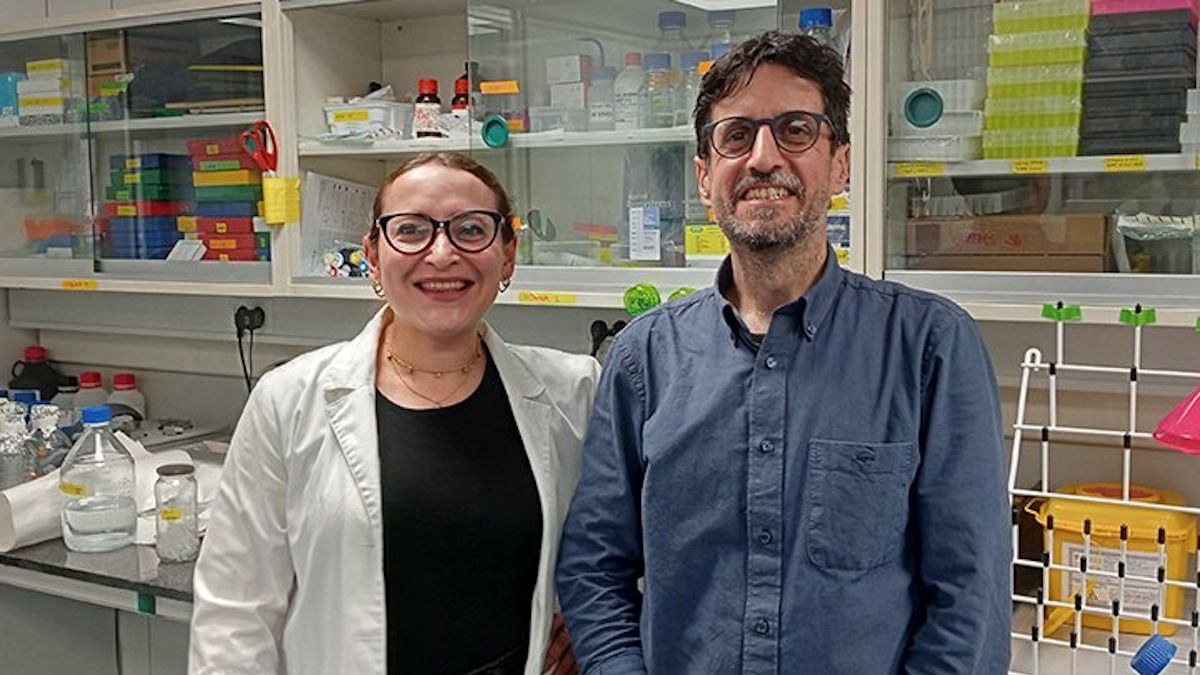
“The study reveals that the fibroblast-rich tumour microenvironment is not merely a spectator but a key player that shapes the tumour’s progression. Tumour-associated fibroblasts can influence the vascular network, the availability of oxygen and nutrients and, potentially, also metastatic dissemination and the immune response,” said Jordi Alcaraz, professor at the UB’s Faculty of Medicine and Health Sciences and researcher at the Institute for Bioengineering of Catalonia (IBEC), the Hospital Clínic de Barcelona and the CIBER Area for Respiratory Diseases (CIBERES), which led the research.
This is an international collaborative study, whose first author is UB researcher Natalia Díaz Valdivia, and which involved experts from the Catalan Institute of Oncology, the Bellvitge Biomedical Research Institute (IDIBELL), the Mayo Clinic (US), the Francis Crick Institute (UK), and the Garvan Institute of Medical Research and the University of New South Wales (Australia).
One of the most promising therapies against lung cancer — the leading cause of cancer-related death worldwide — is immunotherapy, a therapeutic approach that boosts the immune system’s ability to attack cancer cells. Despite its potential, most patients do not respond to immunotherapy, and one of the strategies proposed to increase its efficacy is to combine it with anti-angiogenic drugs, which can help normalise tumour blood vessels and reduce the suppression of the body’s immune response.
“Until now, squamous cell carcinoma, the second most common type of lung cancer, has been excluded from this promising combined therapeutic strategy because it has historically shown resistance to anti-angiogenic therapies, unlike lung adenocarcinoma, which is the most common subtype,” Alcaraz said.
To analyse these differences, the researchers studied various markers related to blood vessel formation and oxygen deprivation in the main types of lung cancer. This comprehensive analysis enabled the identification of how tumour fibroblasts influence the formation of new blood vessels, an effect that was validated in patient samples and animal models.
The results show adenocarcinoma exhibits more active and functional angiogenesis, with higher oxygen levels and less cell death, whereas squamous carcinoma shows poorer formation of blood vessels within the tumour and a more acidic, hypoxic environment. According to the researchers, this difference largely depends on fibroblasts, which provide essential support for tumour development and drug resistance.
“We have observed that, in adenocarcinoma, these fibroblasts promote the formation of blood vessels through a synergy between vascular endothelial growth factor and TIMP-1, a novel proangiogenic factor,” the researcher said.
“By contrast, in squamous cell carcinoma, blood vessel formation is inefficient due to molecular changes in the associated fibroblasts resulting from higher tobacco exposure, resulting in tumours with lower oxygen levels, that is, more hypoxic.”
These results have several biomedical implications. First, they help explain why antiangiogenic treatments have historically been effective in lung adenocarcinoma but not in squamous cell carcinoma.
The increased angiogenesis observed in adenocarcinoma would, according to the researchers, indicate a simple explanation for why these tumours tend to metastasise earlier than squamous cell carcinoma, since metastasis requires tumour cells to access the blood vessel network in order to spread.
These differences in the tumour microenvironment reinforce the idea that the different subtypes of lung cancer require different therapeutic strategies.
“Especially now that combinations of immunotherapy and anti-angiogenic drugs play a central role in oncology,” Alcaraz said.
The researchers said that, rather than applying uniform approaches, both angiogenesis and the tumour microenvironment should be incorporated as criteria for stratifying patients and selecting treatments.
This could include the use of biomarkers such as TIMP-1 to identify tumours that are more dependent on molecular pathways that promote blood vessel formation, as well as the development of rational combinations between immunotherapy and microenvironment-targeted therapies.
“For example, our results suggest that adenocarcinoma might benefit more from treatments targeting specific pro-angiogenic pathways such as SMAD3 or TIMP-1, whereas in squamous cell carcinoma it may be more relevant to target tumour hypoxia or acidosis,” Alcaraz said.
The researchers also highlight the need to develop new therapeutic approaches against TIMP-1 in adenocarcinoma, as there is currently no specific inhibitor available.
In this context, the major current and future challenge is to translate these promising discoveries into the clinical setting:
“[We need] to identify robust biomarkers, such as TIMP-1, validate them prospectively and demonstrate that modulating the tumour microenvironment can truly improve patients’ therapeutic response,” the UB professor said.