


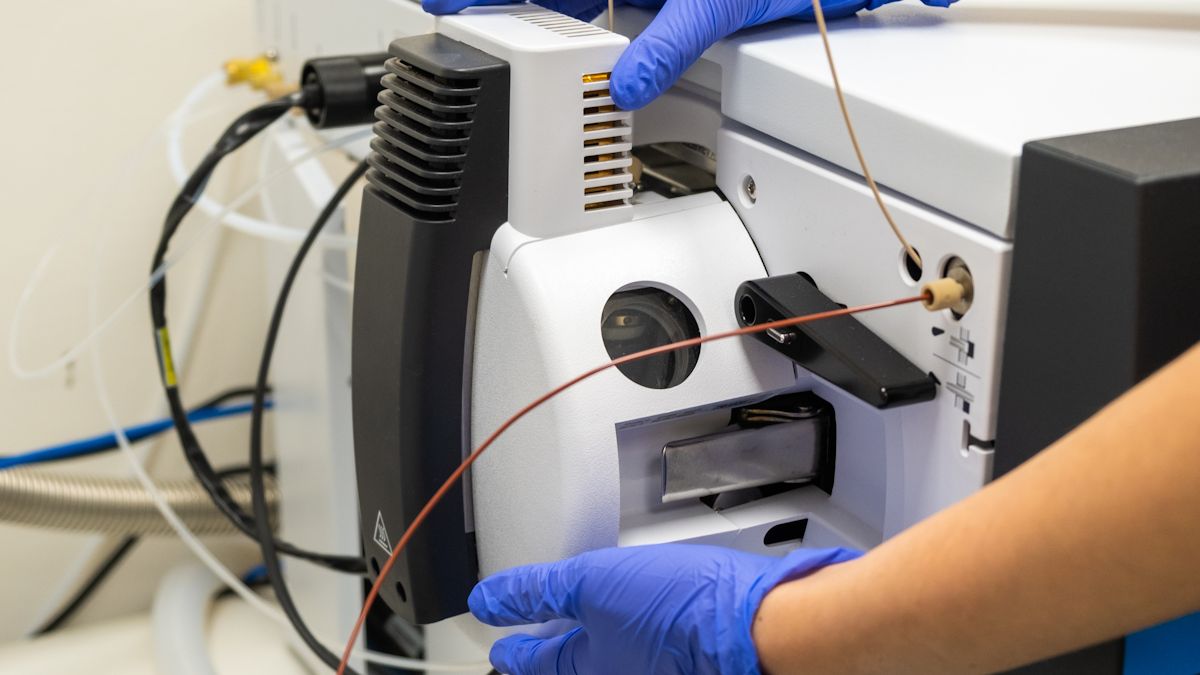
Nicoya Lifesciences, Inc. has launched FastHDX, a new hydrogen-deuterium exchange mass spectrometry (HDX-MS) platform.
FastHDX is the first platform engineered to measure protein structural dynamics and conformational changes at millisecond resolution, enabling direct interrogation of transient states that are inaccessible with conventional techniques.
While many structural biology approaches focus on stable, folded proteins, a growing number of disease-relevant targets are often found through intrinsic disorder, weak interactions, and dynamic allosteric coupling rather than fixed structures. These proteins and regions populate transient conformational states that mediate low-affinity fragment binding and early regulatory events, yet remain difficult to interrogate with conventional techniques.
Intrinsically disordered proteins and regions (IDPs and IDRs), defined as segments longer than 30 residues lacking stable structure, account for one-third of all eukaryotic proteins and play critical roles in diseases such as cancer and neurological disorders. Their highly dynamic nature has limited insight into the transient conformations that govern function and druggability. By enabling millisecond-resolved HDX-MS, FastHDX provides a direct experimental window into these short-lived states, allowing researchers to probe the dynamic mechanisms underlying intrinsically disordered biology and its therapeutic potential.
Key benefits of the platform include a broad labelling time range (50 ms to 24+ hours) that enables the capture of fast, transient conformational dynamics and long-timescale structural changes within a single platform, enabling comprehensive profiling.
Millisecond labelling resolution (1 ms) enables researchers to resolve rapid protein motions and short-lived states that are invisible to conventional seconds-scale HDX-MS tools and techniques.
Low sample consumption (8 µL total) enables millisecond HDX studies with limited or high-value samples, including peptides and early discovery targets, and automated analysis of up to six samples in triplicate with multiple time courses, with robotic expansion enables up to 192 samples unattended.
Seamless integration with commonly used LC-MS systems and analysis platforms for HDX-MS enables the adoption of FastHDX without disrupting existing mass spectrometry infrastructure or retraining teams on entirely new workflows.
“FastHDX enabled us to capture millisecond-resolved exchange behaviour and quantify low-stability structural dynamics that are inaccessible with established HDX-MS approaches,” said Jonathan J. Phillips, from the University of Exeter.
“By resolving these fast processes, we can begin to connect protein dynamics with functional outcomes in ways that were not previously possible. As millisecond HDX-MS becomes more widely adopted, it will significantly expand how we study protein motion, disorder, and mechanism – ultimately unlocking our understanding of complex disease, biotechnology and medicines.”
“FastHDX is the culmination of nearly a decade of development by the Applied Photophysics team, shaped by deep external expertise and years of iteration with early alpha users,” said Ryan Denomme, CEO of Nicoya Lifesciences, who acquired Applied Photophysics in June 2025.
“While millisecond HDX-MS has existed in specialized academic settings, FastHDX is the first commercially available platform built to be robust, automated, and ready for real-world discovery workflows. That maturity is reflected in its adoption and evaluation by leading academic and pharmaceutical organizations, where the technology is being used to support advanced therapeutic development efforts.”