


A new study has discovered that reducing a cellular process called UFMylation helped worms better cope with toxic protein build-up associated with Alzheimer’s and Huntington’s disease.
The change strengthened the worms’ natural protein quality-control systems, reduced the harmful effects of protein aggregation and modestly extended lifespan. The findings identify a previously little-understood pathway that could help researchers better understand why the body becomes less able to manage damaged proteins as it ages, although further research is needed before considering potential treatments.
To answer the question of why ageing makes diseases such as Alzheimer’s and Huntington’s more likely, the study points to a previously little-understood cellular process.
The study, led by Ehud Cohen at the Institute for Medical Research Israel-Canada (IMRIC), Hebrew University Faculty of Medicine, in collaboration with researchers from the National Institute of Biological Sciences (NIBS) in Beijing, China, and published in Nature Communications, examined how ageing affects the body’s ability to keep proteins healthy and prevent them from forming harmful clumps.
Proteins are essential to almost every process in the body, but they need to maintain the correct shape to work properly. As part of their maturation process, proteins add peptides through post translational modifications. As we age, the cellular systems responsible for checking, repairing and removing damaged proteins become less efficient. This can allow abnormal proteins to accumulate and form toxic clumps, a hallmark of several neurodegenerative diseases, including Alzheimer’s and Huntington’s diseases.
Cohen and his team focused on UFMylation, in which cells attach a small molecule to certain proteins, changing how those proteins behave. Although the process is known to be important for normal cell function, its organismal role in ageing and in the build up of harmful proteins has remained largely unclear.
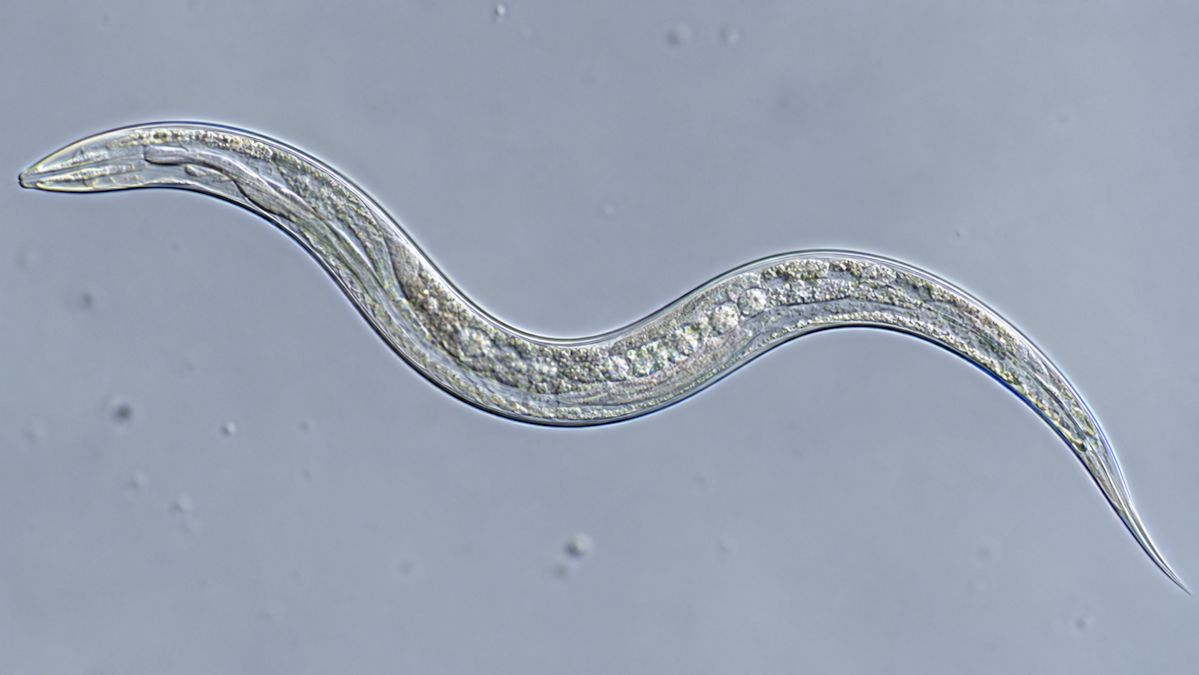
To investigate, the researchers used C. elegans, a tiny worm commonly used in ageing research. Some were engineered to produce amyloid-beta, a protein associated with the development of Alzheimer’s disease, while others produced abnormal proteins similar to those involved in Huntington’s disease.
When the researchers reduced UFMylation, the worms were better able to cope with these toxic proteins. In the Alzheimer’s model, the rate of paralysis, a phenotype that was used as a measure of Aβ toxicity was about 35% lower by day 12 of adulthood compared to control animals of the same strain. The treatment also improved movement in worms carrying Huntington’s-like proteins, including when those proteins were present in neurons.
The worms also lived somewhat longer. In animals burdened with toxic proteins, reducing UFMylation extended lifespan by around 13% compared with untreated worms.
“As we age, our cells become less effective at dealing with damaged and misfolded proteins, and this is closely connected to diseases such as Alzheimer’s and Huntington’s,” Cohen said.
“What we found is that changing the activity of UFMylation can strengthen the cell’s ability to cope with these harmful proteins. We are still far from translating this into a treatment, but the study reveals a new biological pathway that could help us understand why protein-related diseases appear more often later in life.”
The researchers found that reducing UFMylation appeared to strengthen several of the cell’s natural defence systems. It improved the quality control of newly produced proteins, reduced harmful protein aggregation and increased the breakdown and removal of damaged proteins.
The findings also suggest UFMylation changes with age. Using advanced protein analysis, the researchers identified 155 proteins affected by UFMylation, including several involved in aging and the maintenance of healthy network of proteins. Some became more heavily modified as the worms aged, while others became less so.
However, the researchers caution that UFMylation is not simply “bad.” In experiments with human cells, completely removing the process harmed their ability to deal with damaged proteins. This suggests any future treatment would likely need to adjust UFMylation carefully rather than block it altogether.
The next step will be to investigate whether the same mechanisms operate in mammalian and human neurons. For now, the findings open a new direction for studying how ageing weakens the body’s defence mechanisms against toxic proteins and how those defences might one day be strengthened.