


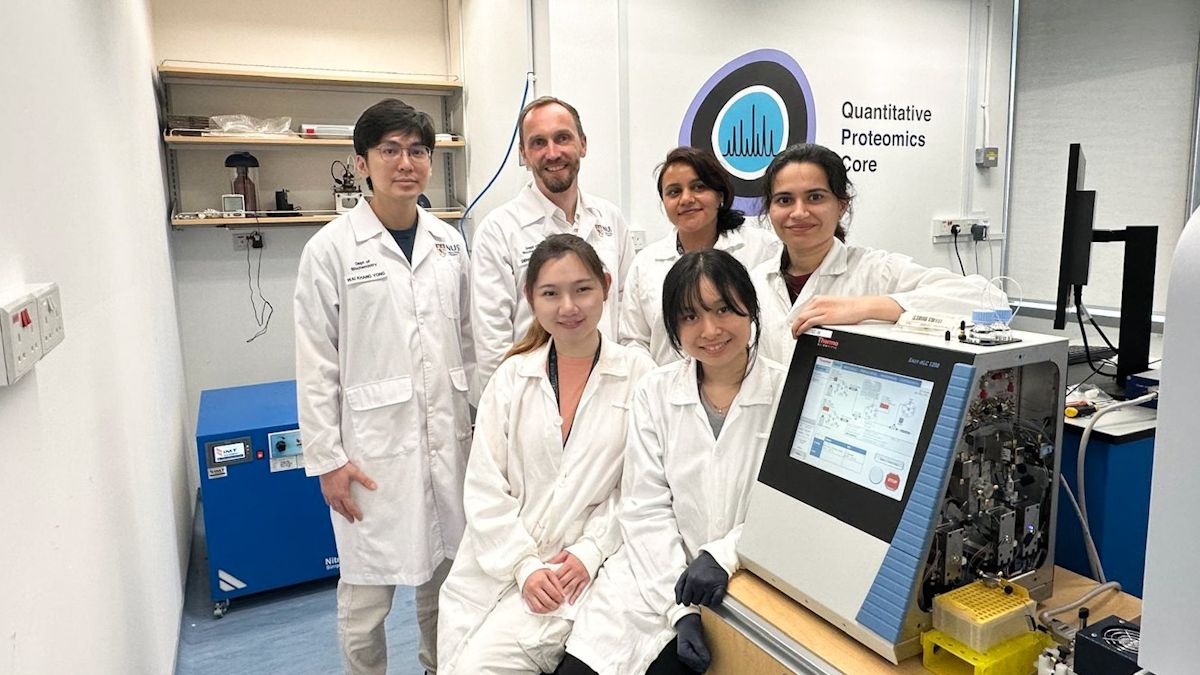
Researchers from the Cancer Science Institute of Singapore (CSI Singapore) at NUS have developed a new method that allows scientists to better understand how DNA is organised and regulated inside cells.
The study, published in the scientific journal Nature Communications, introduces a method called qChIP-MS, which enables researchers to identify groups of proteins that work together at specific locations on DNA.
DNA is packaged into a structure known as chromatin. Chromatin helps determine which genes are switched on or off, protects the genome from damage, and influences how cells respond to stress. Problems in chromatin regulation have been linked to cancer, ageing and other diseases.
Understanding which proteins gather at specific regions of the genome is important because these protein networks help control gene activity and influence how cells behave in health and disease.
For years, scientists have relied on techniques that allow them to study one protein at a time. While these methods have provided valuable insights, they do not reveal the broader network of proteins working together at a particular location in the genome.
“Our DNA is not controlled by a single protein acting alone,” said Yong Wai Khang, first author of the study.
“Instead, many proteins work together in coordinated complexes. We wanted to develop a practical way to see the full cast of players present at a specific region of our genome.”
To address this challenge, the team combined two established technologies, chromatin immunoprecipitation and mass spectrometry, into a single workflow called qChIP-MS. This enables researchers to enrich selected chromatin regions and identify the proteins associated with them, while also measuring how abundant those proteins are.
The researchers validated the technique using telomeres, the protective caps at the ends of chromosomes that play an important role in ageing and cancer. The method successfully identified known telomere-associated proteins and demonstrated that it could be applied to different types of biological samples, including tissues and specific genomic regions.
Importantly, the team also developed strategies to reduce false-positive results, a longstanding challenge in chromatin-based studies. By carefully benchmarking the workflow, they established a more reliable approach for interpreting complex chromatin data.
While qChIP-MS is primarily a research tool, its potential impact could be far-reaching. By helping scientists understand how proteins interact with chromatin in healthy and diseased cells, the technology may accelerate discoveries in areas such as cancer biology and genome regulation, and could eventually inform future therapeutic strategies.
The researchers are already applying qChIP-MS to study how chromatin changes at telomeres in cancer cells. In particular, they are investigating a process known as Alternative Lengthening of Telomeres (ALT), which allows certain cancers to maintain their telomeres and continue dividing.
The team also plans to further improve the sensitivity of the technology so that it can be used with smaller sample sizes and applied to increasingly precise regions of the genome.
“This work provides researchers with a new way to study how chromatin is organised and regulated. We hope it will become a useful addition to the toolbox for scientists investigating fundamental biology and diseases such as cancer,” said assistant professor Dennis Kappei, senior author of the study and principal investigator at CSI Singapore.
Kappei is also a faculty member at the Department of Biochemistry, and a theme co-lead at NUS Centre for Cancer Research (N2CR), both within the NUS Yong Loo Lin School of Medicine.