


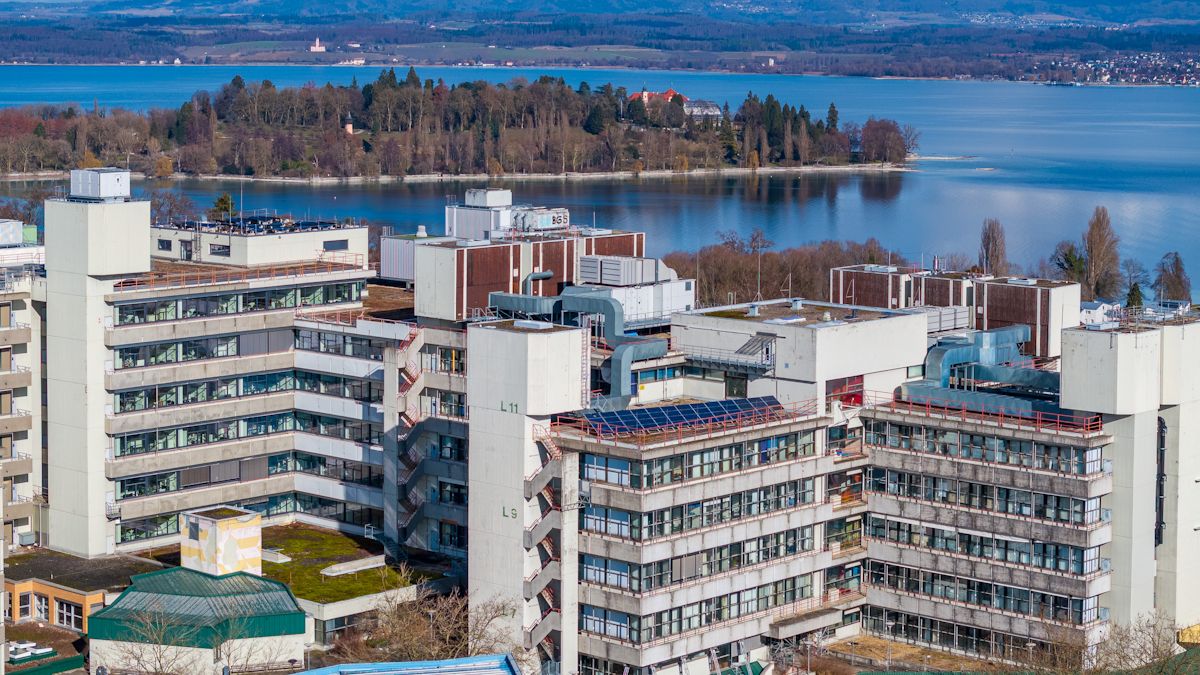
A new centre for cell research is being set up at the University of Konstanz in Germany.
The Single Cell Centre, which will open in 2027, combines specialized large-scale equipment and research methods to examine individual cells in detail and detect molecular differences between cells. Not only research at the university will benefit from the new centre: through the BioLAGO e.V. innovation network, around 150 institutions within the region’s healthcare alliance will be able to access the new infrastructure – for example the Konstanz hospital, diagnostic laboratories as well as regional companies. This opens new perspectives for medical diagnostics and research: In future, blood and tissue samples can be analysed, and the reactions of cells to biochemical or genetic changes can be traced in detail.
The Single Cell Centre at the University of Konstanz is supported with around €1.8m in funding by the Ministry of Science, Research and the Arts Baden-Württemberg as part of the European Regional Development Fund programme (ERDF). The new technology centre will be established by March 2027.
Not all cells are the same. The molecular characteristics of cells can vary greatly, even within the same blood or tissue sample.
“What we used to regard as a uniform cell population actually consists of different subgroups of cells,” said Kathrin Schumann, professor of immunology at the University of Konstanz.
These differences can become highly relevant when researching complex diseases and developing new medications – especially on the path toward personalised medicine, which aims to provide tailored therapies for individual patients in the future.
In the Single Cell Centre, researchers will be able to examine cells in their uniqueness and detect even the subtlest molecular differences. Cells from blood and tissue samples can be separated and studied individually at high resolution, so that molecular structures and interactions become visible. In this way, protein changes in cells can be identified, and it is possible to analyse how individual cells react to genetic changes. However, the research possibilities are not limited to human cells: Plant and other animal cells, too, will be analysed at the Single Cell Centre.
At the heart of the Single Cell Centre are three large-scale scientific instruments: A high-speed cell sorter enables the separation of individual cells. A high-resolution mass spectrometer and a spectral analyser can be used to study the cells at different resolutions.
“We did not have such a technology platform in the Lake Constance region before,” said Florian Stengel, professor of biochemistry at the University of Konstanz.
The new centre is also intended to be a training hub for the next generation of specialists. Students at the university receive professional training in applying the methods and become involved in research during their studies.
“With the establishment of our centre for single-cell analysis, a leading innovation platform is emerging in the Lake Constance region. Access to high-precision cell analysis methods strengthens the regional healthcare network and start-ups in the field of biotechnology. At the same time, our research priority Molecular Principles of Life benefits greatly from the new technological capabilities of the Single Cell Centre as well as from the exchange with partner institutions using the technology platform,” said Dirk Leuffen, vice rector for research, innovation and impact at the University of Konstanz.
The Single Cell Centre acts as a key interface for several of the university’s major research networks, such as the transregional Collaborative Research Centre 353, Regulation of Cell Death Decision, which investigates cell death, and the newly established Collaborative Research Centre 1756, Chemical and Biological Principles of Cellular Trigger Responses, which examines how cells react to chemical and physical changes in their environment. The Single Cell Centre will boost the university graduate schools and Research Training Groups in the field of life sciences.