


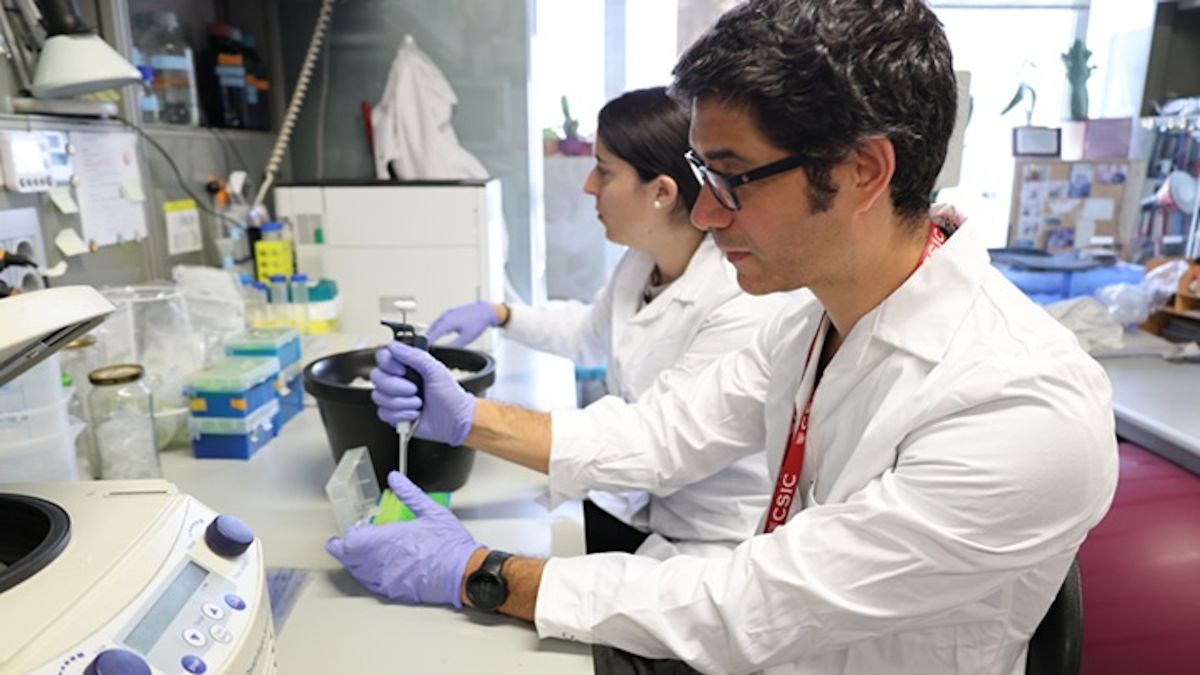
A research project led by the Institute for Research in Nutrition and Food Safety (INSA) and the Faculty of Pharmacy and Food Sciences at the University of Barcelona, together with the Molecular Biology Institute of Barcelona (IBMB) of the CSIC (stands for Consejo Superior de Investigaciones Científicas), has successfully designed and tested a gluten-degrading molecule that is a promising ally in the management of coeliac disease, an autoimmune disease whose symptoms are triggered by the consumption of gluten and other prolamins found in cereals.
At present, there is a complete lack of treatment options beyond a diet free from gluten, which is difficult to maintain in Western societies where diets rely heavily on wheat products.
The major breakthrough is that the molecule is effective at very low concentrations and at a pH of 2 — the pH of the stomach — a condition that none of the molecules currently available or under development had previously achieved with efficiency. Although some of them are marketed as nutritional supplements, they are not an effective alternative to gluten-free diets.
The study was published in the journal EMBO Molecular Medicine ahead of the International Day of Coeliac Disease — May 16 — and is led by researchers Francisco J. Pérez-Cano (INSA-UB), and F. Xavier Gomis-Rüth (IBMB-CSIC). The co-first authors are Marina Girbal-González and Arturo Rodríguez-Banqueri (INSA-UB and IBMB-CSIC, respectively). Teams from the Institute for Food Science Research (CSIC-UAM), the University of Salzburg (Austria) and the Technical University of Munich (Germany) also participated.
The trigger for coeliac disease are prolamins, proteins found in most common cereals in our diet, such as wheat gluten. When these are digested in the stomach, they break down into smaller fragments (peptides). Some of these can be toxic, such as the gluten immunogenic peptides (GIPs), which can withstand the stomach’s gastric acids and reach the small intestine. Among these, one of the most immunogenic is the ‘33-mer’, a fragment of the α-gliadin in wheat gluten that is highly immunogenic.
This poses a problem for people with coeliac disease, because once in the small intestine, the 33-mer and other GIPs bind particularly easily to a receptor of the immune system (the human leukocyte antigen, or HLA), triggering the inflammatory autoimmune response that causes the characteristic symptoms of the disease.
Four years ago, the Proteolysis Group at IBMB-CSIC, led by F. Xavier Gomis-Rüth, described in an article in Nature Communications that nephrosin — a molecule found naturally in the digestive juices of the carnivorous plant Nepenthes ventrata — was capable of cleaving GIPs, building on results from the group of David Schriemer from the University of Alberta in Canada. In collaboration with the Autoimmunity, Immunonutrition and Tolerance Group at the UB’s Faculty of Pharmacy and Food Sciences, led by Francisco José Pérez-Cano, they demonstrated nephrosin can degrade the 33-mer peptide and other GIPs before they reach the intestine, potentially preventing this autoimmune inflammatory response.
In the study, the team designed and tested a molecule based on nephrosin. Named celiacase, the new molecule exhibits its maximum activity at the gastric pH of the stomach, where, in synergy with the pepsin in our digestive system, it breaks down the GIPs in cereals and the gliadin in wheat before they pass into the duodenum.
“There are other proteases, generically termed glutenases, which break down gluten, but they are not fully active at pH 2 — the pH of the stomach — but rather at pH 7 — the pH of the duodenum — when the bolus has already left the stomach,” Gomis-Rüth said.
“Therefore, it is necessary to increase the doses to levels that make them unviable for therapeutic use.”
The team tested the molecule in vivo using a mouse model developed by the University of Chicago, which is currently the model that most accurately replicates coeliac disease. The results show celiacase is effective at very low doses, being able to mitigate the symptoms of the disease in gluten-fed mice, even at high gluten intake levels.
“Intestinal atrophy, inflammation, the antibody response and dysbiosis — that is, the alteration in the composition of the microbiota — were reduced,” Pérez-Cano said.
“Furthermore, immunoregulatory markers were restored to normal levels, as were microbial metabolic pathways.”
The results demonstrate that celiacase, a molecule stable in the stomach environment, could be an adjunctive therapeutic candidate to support a gluten-free diet.
Another advantage of celiacase is that it is no longer active once it reaches the duodenum.
“Once it has accomplished its function, there is no need for it to remain active, so that it does not interfere with other proteins in the body,” Gomis-Rüth said.
The molecule and its potential applications have been patented, and the team is taking the first steps towards setting up a spin-off company and taking the development to more advanced stages.