


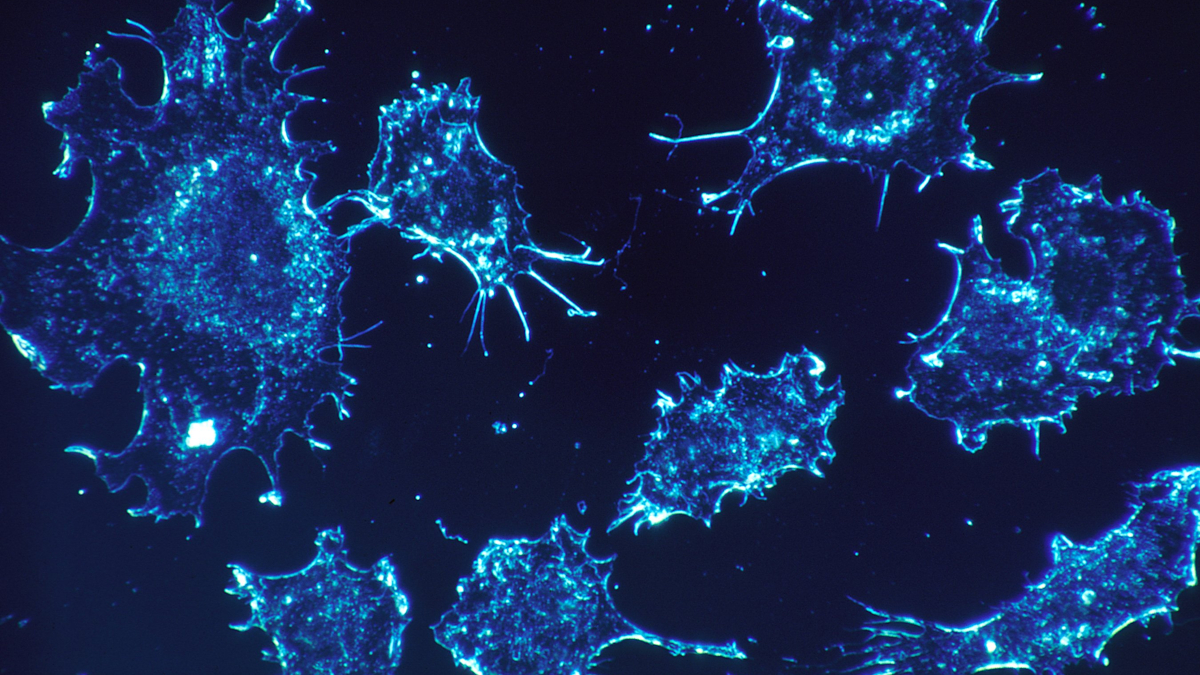
Cancer cells excel at evading detection, but subtle chemical differences set them apart from healthy cells. Wageningen University & Research researchers, together with colleagues in the US, have identified a way to exploit this distinction. Using a variant of CRISPR, a modern tool for cutting DNA, they distinguished tumour DNA from healthy DNA and selectively cleaved only the former. The study, published today in Nature, marks an early but promising step towards a cancer therapy that targets and destroys tumour cells with high precision.
The new method relies on methyl groups, small chemical tags on the DNA that switch genes on or off. DNA methylation normally ensures that genes needed by a particular cell type are active by switching off unnecessary genes. Methylation patterns in cancer cells vary from those in healthy cells and can act as a molecular ‘fingerprint’ that helps researchers differentiate malignant cells from healthy ones.
The team used ThermoCas9, a CRISPR variant they discovered in bacteria several years ago. Like other CRISPR systems, researchers can programme ThermoCas to locate and cut specific sections of DNA within a cell. In laboratory experiments, the researchers introduced this system into human cells grown in culture dishes: healthy cells in one dish and tumour cells in another. They programmed ThermoCas to detect genes that are methylated in healthy cells but unmethylated in tumour cells.
This approach worked: ThermoCas cut DNA in tumour cells while leaving healthy DNA intact. The system thus proved capable of detecting the subtle chemical difference between healthy and tumour cells and acting on it. “This makes this ThermoCas the first CRISPR-associated enzyme to respond to differences in DNA methylation,” said John van der Oost, one of the authors of the paper.
“It means we now have a system that we can target specifically towards tumour cells.”
The study represents the first time a CRISPR-based method has relied on methylation to target human cancer cells. “ThermoCas9 uses methylation like an address to precisely target cancer cells while leaving healthy cells untouched,” said Hong Li of the Van Andel Institute.
“The findings could be a game changer.”
The explanation for ThermoCas’ selective behaviour lies in the way it binds to DNA. Before a CRISPR system cuts DNA, it must first attach to a short recognition sequence next to its target, known as the PAM (Protospacer Adjacent Motif). ThermoCas9 is unique in that its PAM sequence includes a human methylation site, meaning it can contain a methyl group.
“The CRISPR system binds very precisely to this recognition code,” Van der Oost said.
Compare it to a screwdriver that fits perfectly into a matching screw head. If there is a protrusion inside the groove, the screwdriver no longer fits, nor is it capable of performing its job. In the same way, a methyl group disrupts the fit between ThermoCas9 and the DNA, preventing binding and leaving the DNA sequence untouched.
“ThermoCas9 is a perfect example of the value of fundamental research; you have to know how these individual pieces work together. We used biochemistry and structural biology to discover a mechanism that we one day hope will lead to more precise, effective cancer treatment,” Li said.
There is a long way to go before the technology can be translated into a potential cancer treatment. The new study demonstrates selective DNA cleavage, but does not yet show that this effect can kill tumour cells. The next step focuses on damaging tumour DNA sufficiently to trigger cell death.
For the follow-up research, Van der Oost and postdoctoral researcher Christian Südfeld received an European Research Council Proof of Concept grant at the end of January. After, the therapy will need to be further tested.
“It will probably take at least ten years before such a therapy could become available to patients,” Van der Oost said.
The researchers are already exploring broader applications. Aberrant methylation patterns also play a role in other diseases, including neuroblastoma and autoimmune disorders. In the future, ThermoCas9 — or a similar CRISPR tool — may evolve into a versatile molecular tool that recognises diseased cells by their chemical “signature” and selectively disables them.
“With this approach, we could potentially direct CRISPR specifically to diseased cells and ultimately treat patients,” Van der Oost said.