


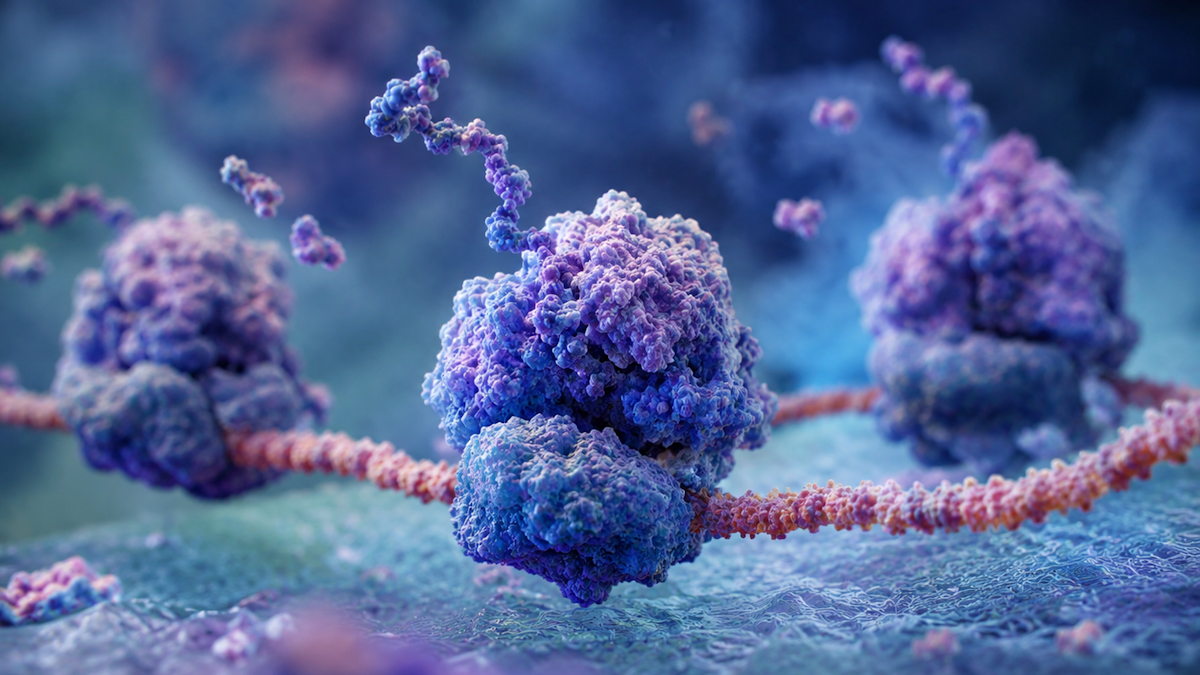
The speed at which a cell produces proteins is a decisive factor in determining whether it divides, specialises, or retains its stem cell properties.
A team of researchers led by Stefan H. Stricker, professor of epigenetic engineering at LMU’s Biomedical Center and research group leader at Helmholtz Munich, has worked with international partners to demonstrate directly for the first time that the amount of ribosomal RNA (rRNA) directly regulates these processes. Their results have been published in the journal Science.
It has been established for some time that the amount of ribosomal RNA differs between different types of cells and is altered in the case of several diseases. But it remained unclear whether these specific characteristics are the cause or merely the result of biological processes.
With the newly-developed CRISPR-based method TAPIR (targeted activation of protein translation), researchers now have access to a tool that can boost the activity of ribosomal genes and influence a cell’s protein production as a result.
“Our new study shows that targeted activation of rRNA production significantly increases protein synthesis,” said Stricker, lead author of the publication.
The results could be particularly relevant for diseases in which ribosome function is disturbed. These include ribosomopathies such as Treacher-Collins syndrome, a rare congenital disease that causes facial malformations. In a mouse model, the researchers successfully managed to partially compensate for disease-related alterations by stimulating rRNA production in a targeted way.
In addition, the research team observed that similar mechanisms also play a role in pancreatic cancer. Tumour cells seem to use increased rRNA production to maintain their rapid growth. In the mouse model for pancreatic cancer, TAPIR was able to increase rRNA production and promote the growth of the cancer cells. This shows that the increased rRNA production has a causal effect in contributing to tumour growth and is not just a side effect.
“Our study clearly shows that the regulation of protein biosynthesis plays a key role both in processes of development and growth and in the development of cancer,” Stricker said.
He views TAPIR as a research platform for better understanding the impact of protein synthesis on health and disease and for developing new therapeutic approaches over the long term.
It is conceivable that in the future this approach will be suitable for treating diseases associated with reduced ribosome function and also open up new targets for therapies to combat tumours in which protein production has spiralled out of control.